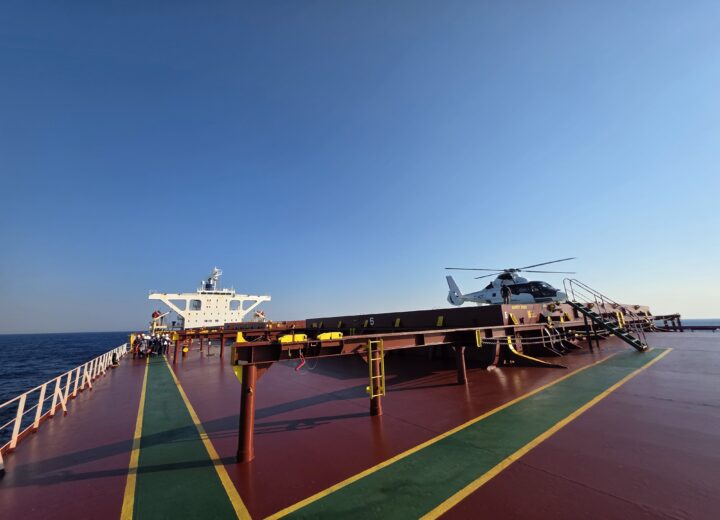
During the weekend of 24 and 25 January 2026, Cape Town Helicopters and Medevac Africa, a division of Global Medical Safety and Risk Solutions (GMSRS), conducted a two-day integrated helicopter rescue training camp in the Gansbaai area of the Western Cape.
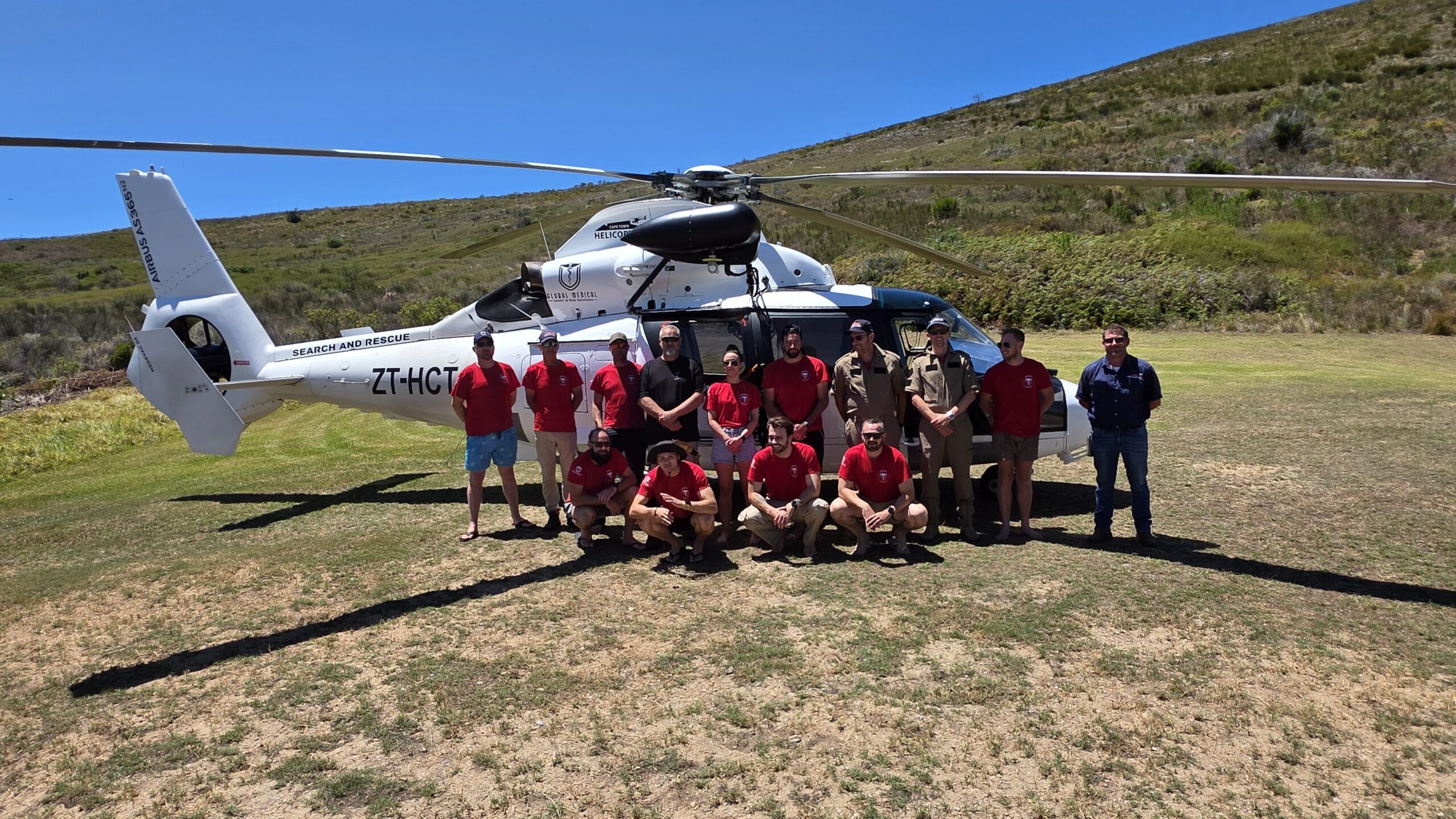
The training camp was designed to enhance joint operational capability across a range of high-risk mission profiles, including air-sea rescue and water operations, terrestrial and mountainous rescue, remote deployment logistics for disaster response and salvage operations, as well as overall team integration and cohesion.
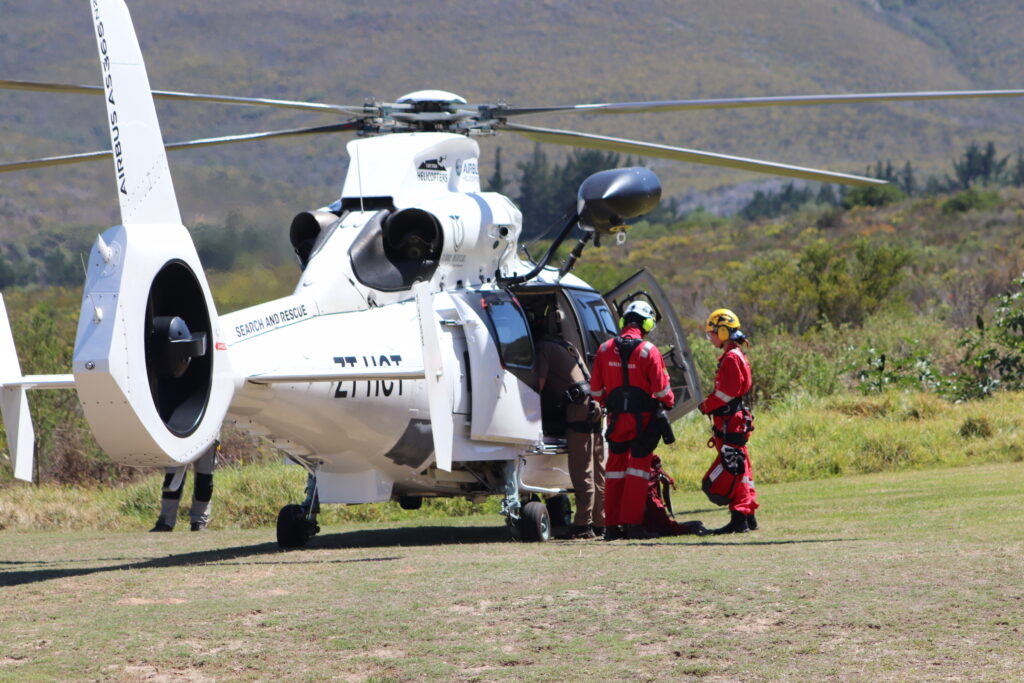
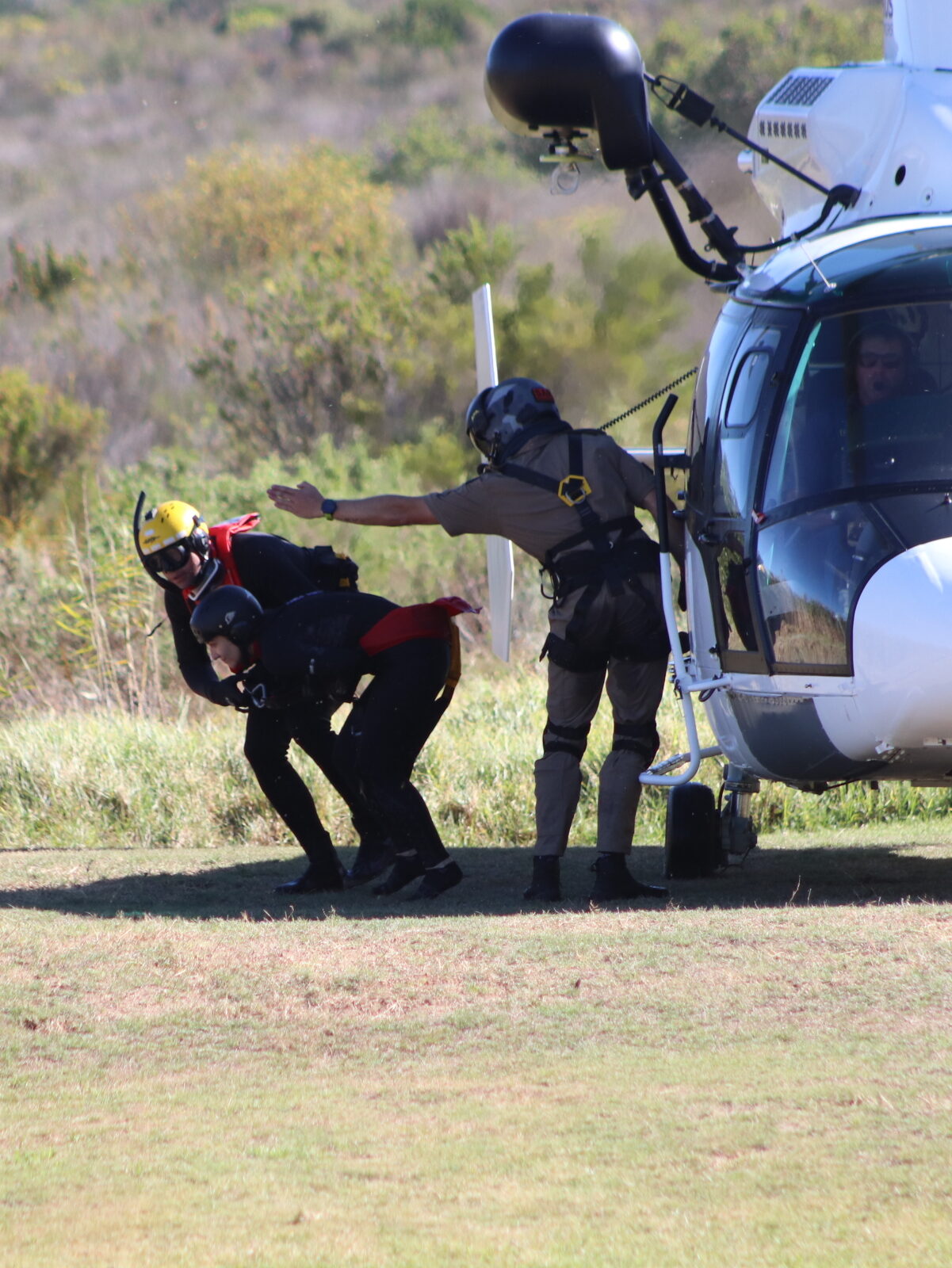
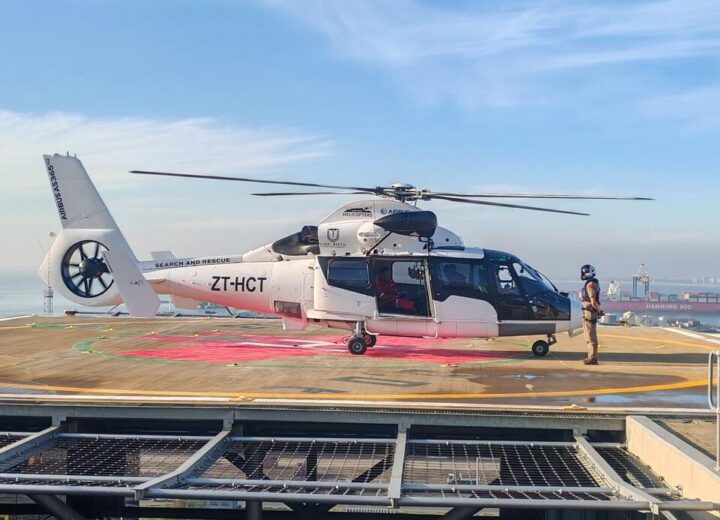
Ground teams departed early on Saturday morning to establish a forward operating base and secure a suitable landing zone in preparation for helicopter operations. This ensured that all safety and operational controls were in place ahead of the aircraft’s arrival, allowing the training programme to commence without delay.
The combined deployment included Cape Town Helicopters flight crew and engineering personnel, together with GMSRS Medevac Africa medical rescue specialists. The integrated team consisted of approximately 18 personnel, representing aviation, engineering, medical, and technical rescue disciplines.
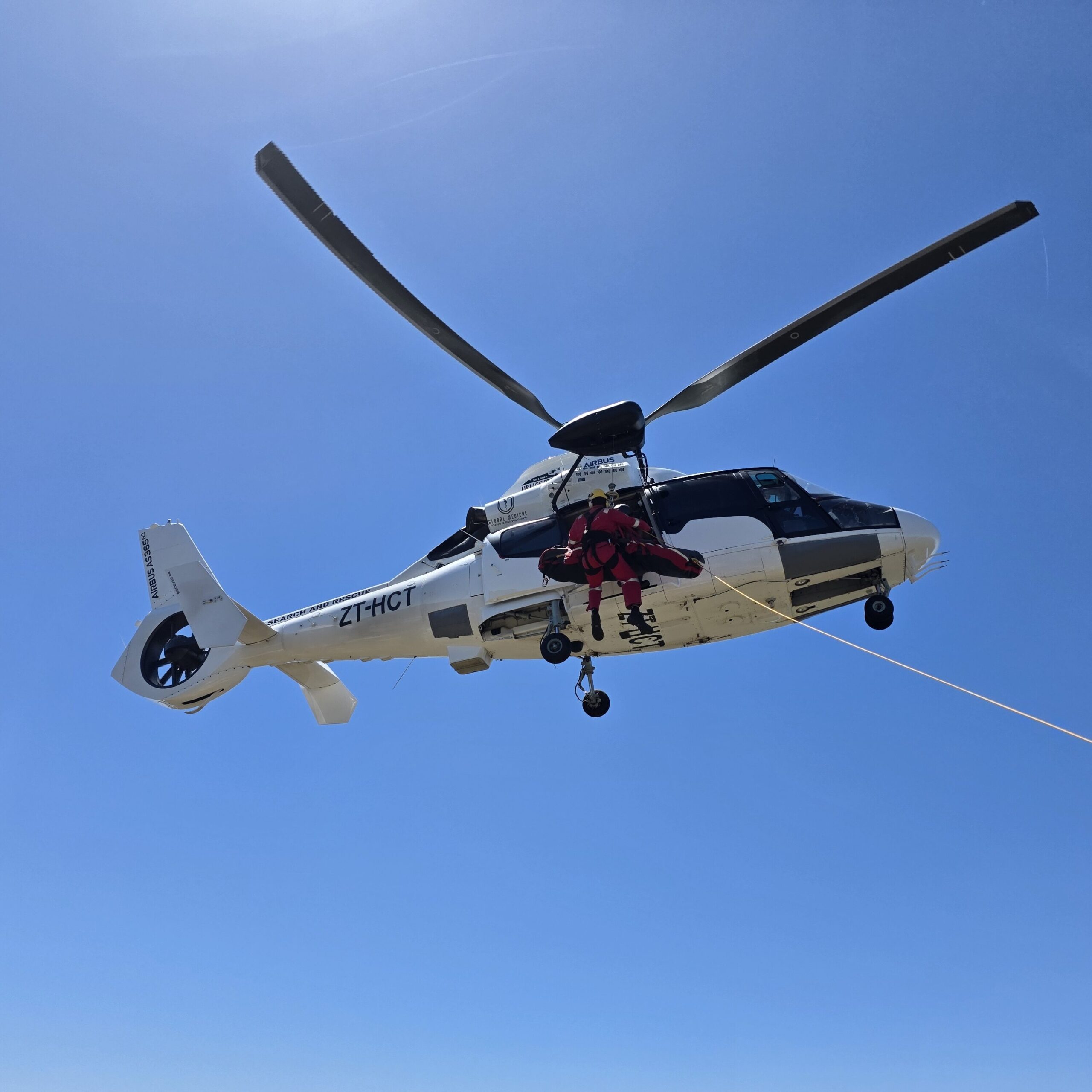
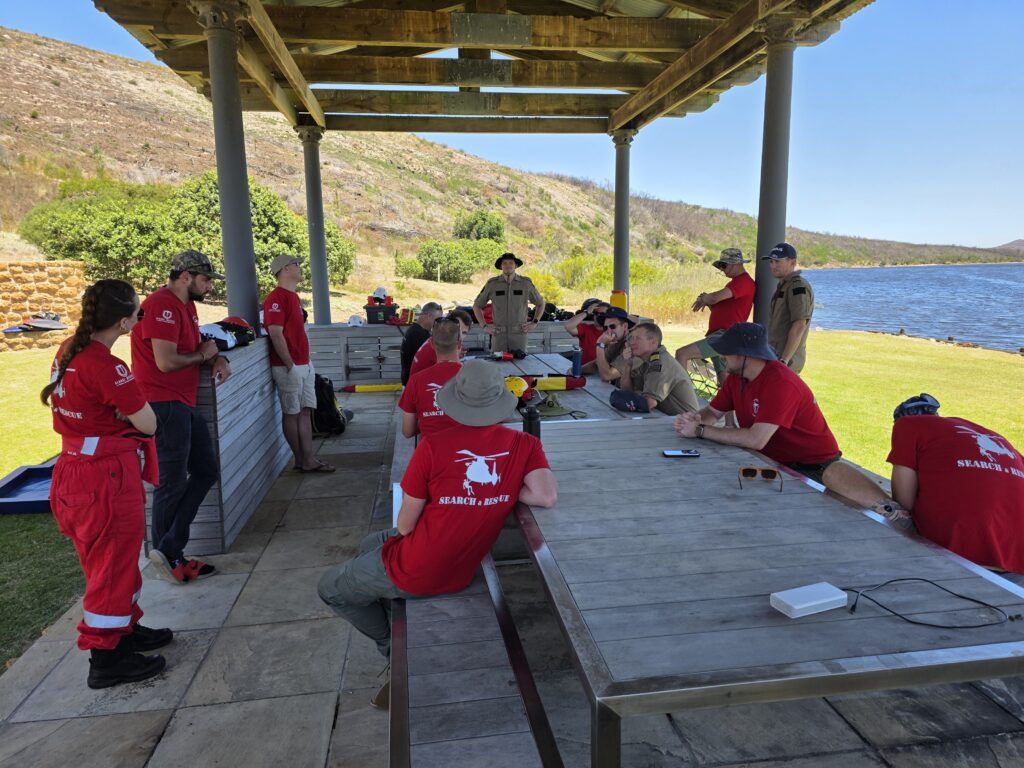
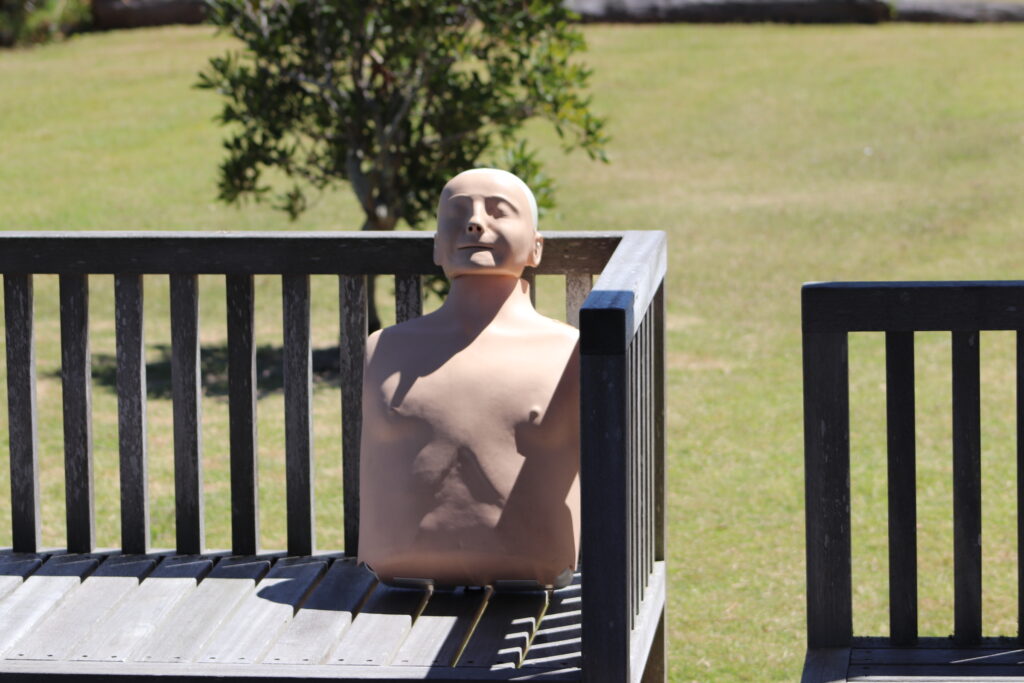
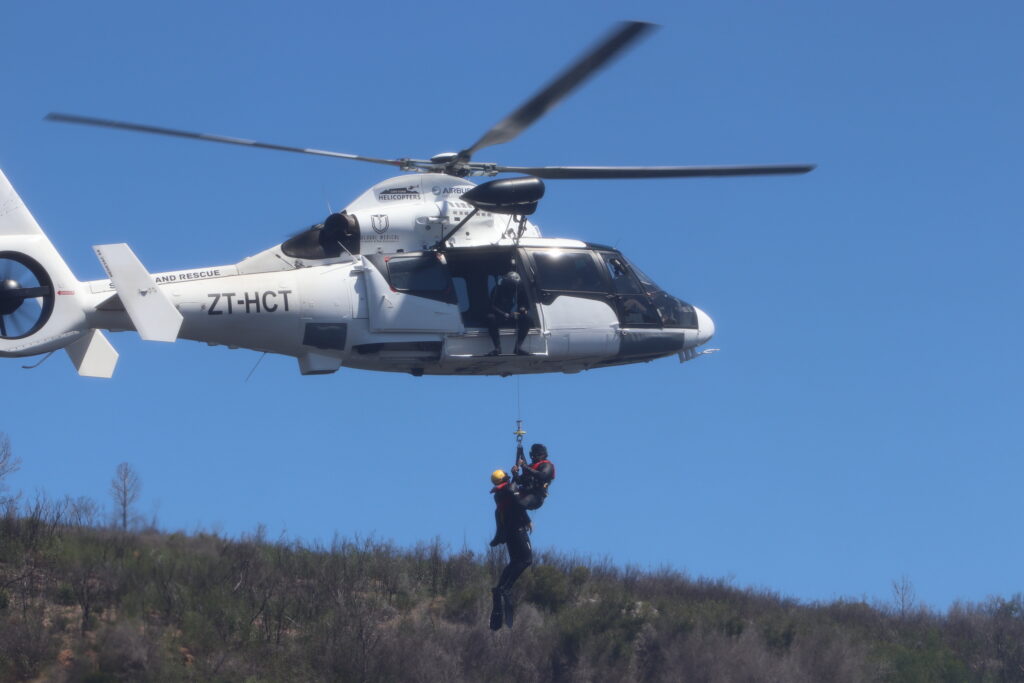
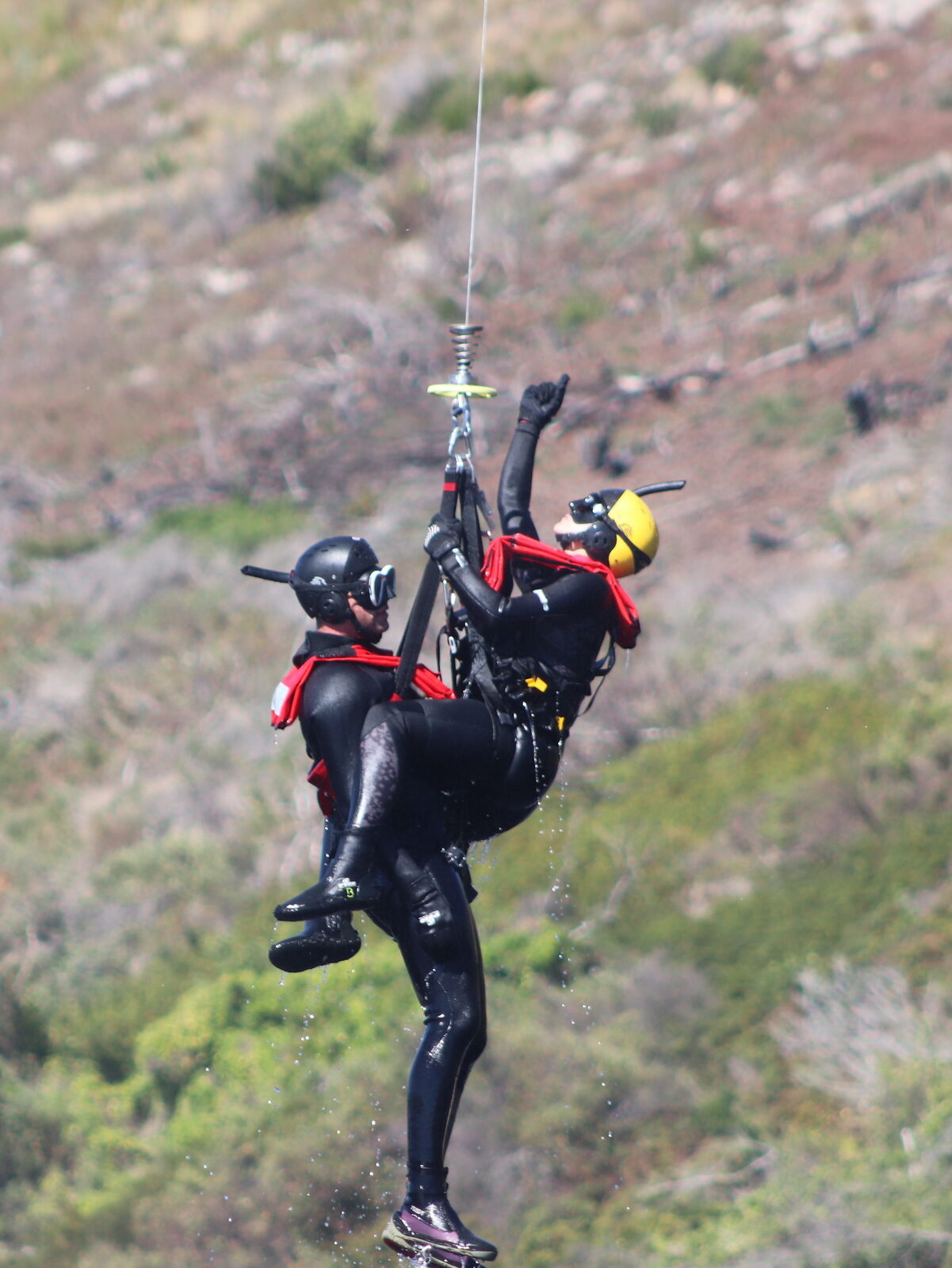
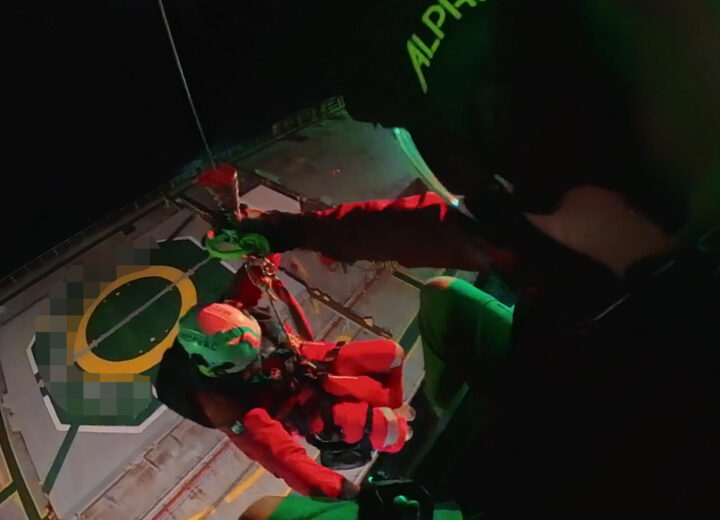
Following an initial joint briefing outlining the objectives and safety considerations for the weekend, the first training evolution focused on terrestrial rescue in remote and inaccessible mountainous terrain. Scenarios required the extraction of patients from locations inaccessible to ground teams. One simulated patient was extracted using a helicopter hoist “hot seat” configuration for rapid recovery, while a second patient with suspected spinal injuries was fully immobilised and extracted using a hoist-compatible rescue litter system. Medical care continued throughout the evolution, including in-flight patient management, to replicate a complete rescue and evacuation profile.
Upon completion of the terrestrial exercise, teams conducted a structured debrief to review performance, identify lessons learned, and highlight opportunities for operational improvement.
The programme then shifted focus to extended-operation ground procedures, including aircraft refuelling and logistics during prolonged deployments such as disaster response or salvage operations. These sessions were led by the flight and engineering teams, providing medical rescuers with practical insight into aviation ground safety and support requirements during sustained operations.
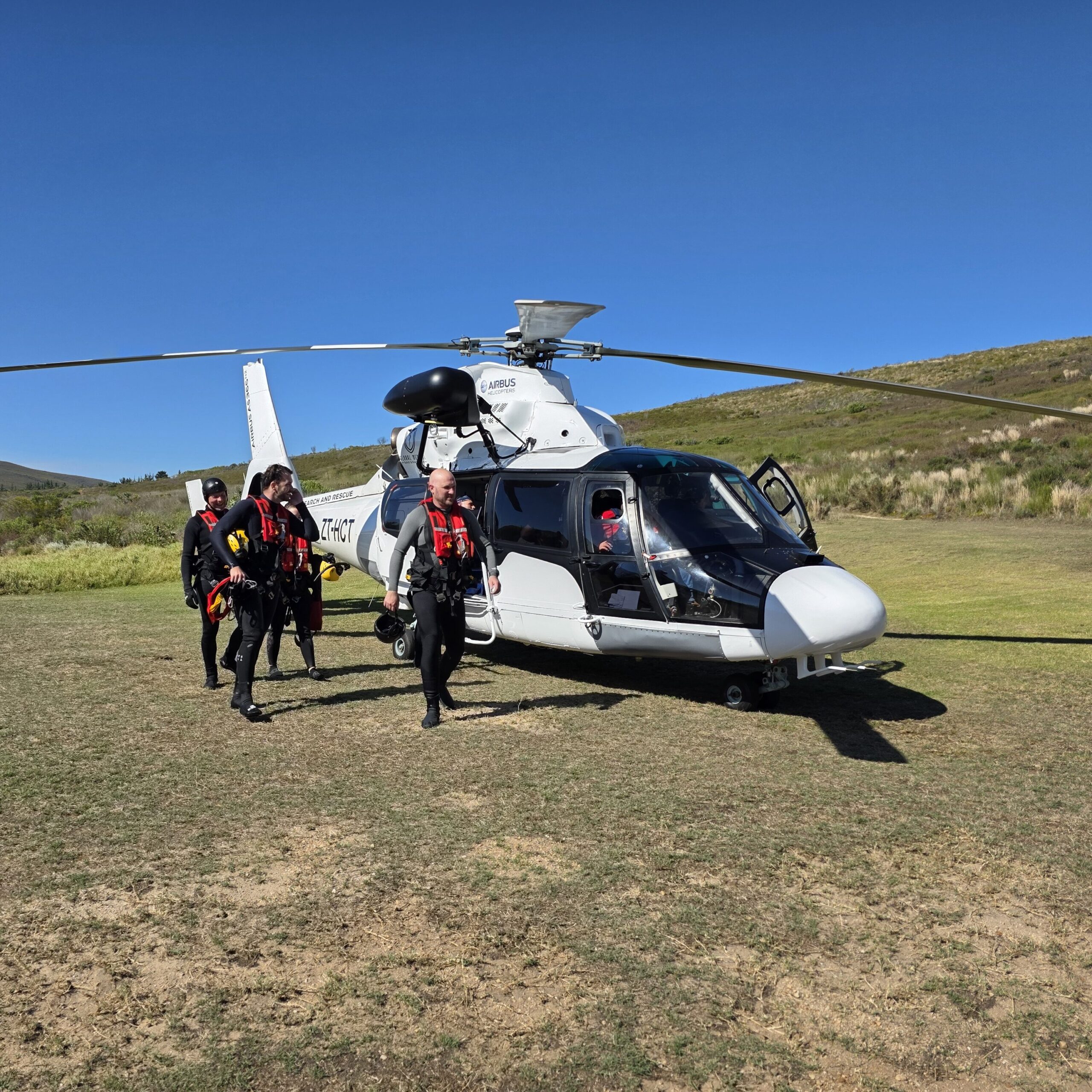
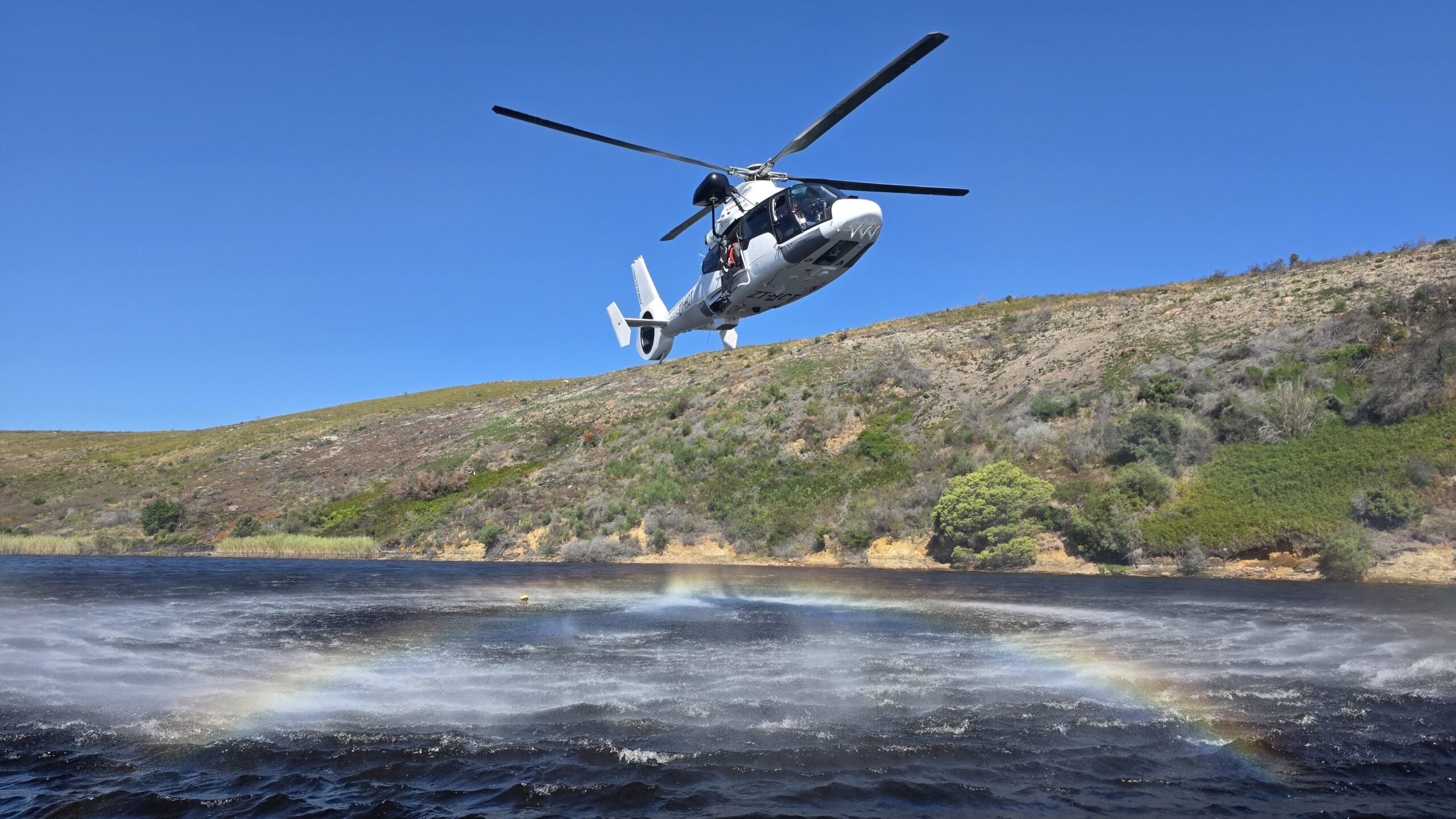
The remainder of Saturday and Sunday was dedicated to air-sea rescue and water operations. Training included multiple deployment techniques from the aircraft, survivor recovery from the water, and safe integration of rescued persons into the aircraft cabin. Emphasis was placed on managing limited cabin space, securing survivors safely, and maintaining crew coordination throughout the evolution. Dedicated safety vessels were positioned on the water throughout these exercises to provide additional risk mitigation.
Over the course of the weekend, the team completed approximately five flight hours, incorporating multiple hoist evolutions and water rescue deployments. The training camp successfully reinforced interoperability between aviation and medical rescue elements, strengthened team cohesion, and identified areas for further refinement ahead of future operational taskings.
Contact Information
For emergency medical rescue or search and rescue activations, contact the GMSRS 24/7 Emergency Operations Centre (EOC): +27 87 22 33 180
For general media enquiries, contact our office during office hours on +27 87 073 6700 or email media@gmsrs.com